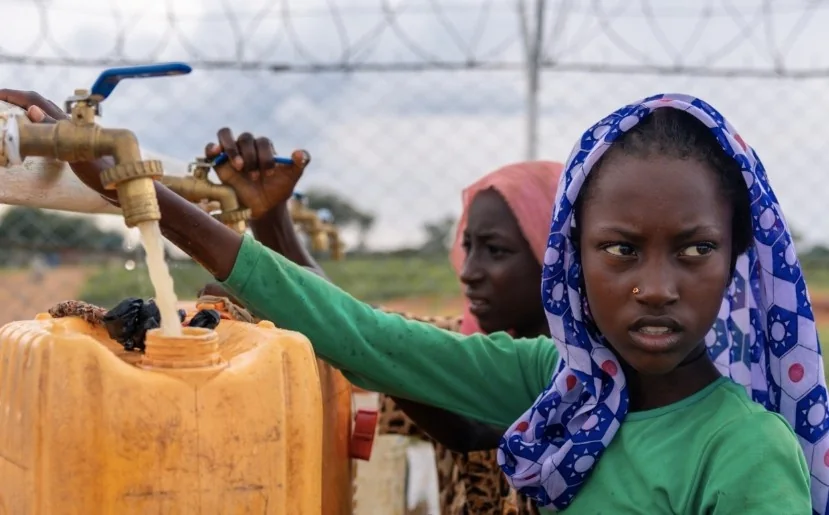
Women and girls in Sudan's El Obeid are being forced to choose between the danger of drone attacks during the day and sexual violence after dark as they try to fetch water, UN Women reported on Friday.
According to the agency, drone strikes on water sources and distribution points have forced many women and girls to change when they collect water. Rather than risk going out during the day, many now wait until nightfall in the hope that darkness will offer some protection from the attacks. Instead, many are harassed, raped or subjected to other forms of sexual violence while trying to fetch water for themselves and their families.
"There is no safe window for women and girls to collect water. Sexual violence has been used as a weapon throughout Sudan's three-year war, becoming one of its most defining features," UN Women said in a statement.
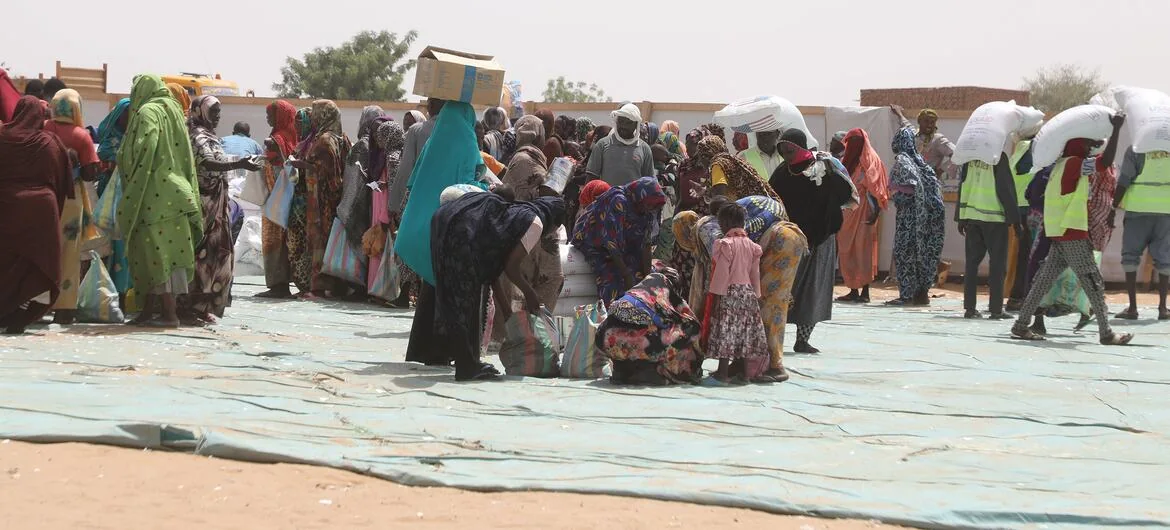
Access to food, healthcare and other essential services has also become increasingly difficult in El Obeid, especially for families living in displacement sites. The lack of these basic services, the UN agency said, is adding to the risks facing women and girls, who are already struggling to safely access water.
The risks are expected to increase as the rainy season reaches its peak next month, when access to clean water becomes even more important in preventing waterborne diseases. Yet cholera is already spreading in Sudan, with the World Health Organisation (WHO) reporting 1,330 cases in early July.
At the same time, poor nutrition and limited healthcare are leaving many women and girls more vulnerable to severe illness.
According to UN Women, the violence reported in El Obeid is not an isolated case but part of a broader pattern seen across Sudan since the conflict began in April 2023. The agency added that the number of women and girls needing gender-based violence services has quadrupled during that period to an estimated 12.7 million this year.
As the number of survivors grows, the organisations providing support are finding it harder to keep their services running. UN Women said funding cuts have forced many women-led groups to reduce or close safe spaces and other gender-based violence services, leaving survivors with fewer places to turn for help.
“Two-thirds of women’s organisations surveyed by UN Women in Sudan report that safe spaces and gender-based violence services have either closed or been significantly reduced in their communities,” said the agency.
“Half of the organisations surveyed report that, without urgent financial support, they expect to suspend their operations or close entirely within the next year.”
Against that backdrop, UN Women renewed its call for an immediate ceasefire and safe, unhindered humanitarian access across Sudan. It also urged all parties to protect women and girls, hold those responsible for abuses accountable, and ensure survivors have access to justice and support.
“Women must be fully, safely, and meaningfully included in peace processes, humanitarian decision-making, and recovery efforts. Increased investment in women-led organisations is essential, as they remain among the last lifelines for women and girls across Sudan,” the agency said.



















Comments
Sign in with Google to comment, reply, and like comments.
Continue with Google