Few fruits are as eye-catching as the jackfruit, locally known in East Africa as Fenesi.
Covered in a spiky green skin and capable of weighing more than 30 kilograms, the tropical fruit has long been a favourite in Kenya's Coast region and parts of western Kenya, where it is eaten fresh, cooked or sold by roadside vendors.
Often described as tasting like a blend of pineapple, mango, banana, cantaloupe and pawpaw, jackfruit is not only prized for its sweet flavour but also for its nutritional value.
A 2019 review published in the International Journal of Food Science found that jackfruit is packed with vitamins, minerals, antioxidants and dietary fibre that may support heart health, digestion, immunity and healthy skin.
Its origin
Jackfruit is native to India and Bangladesh, where it has been cultivated for thousands of years.
Historians believe it reached East Africa through Indian Ocean trade routes, brought by Arab and Indian traders centuries ago. The fruit adapted well to the warm, humid climate along the Kenyan coast and gradually spread inland.
Today, jackfruit is commonly grown in Mombasa, Kilifi, Kwale, Lamu and Taita Taveta, as well as parts of Kakamega, Busia, Bungoma, Kisii and Migori.
It is also widely cultivated in neighbouring Tanzania.
Jackfruit grows best in warm tropical climates with high humidity, abundant rainfall and well-drained soils.
These conditions make Kenya's coastal counties ideal for cultivation, allowing farmers to harvest dozens of fruits from a single mature tree each season.
Jackfruit holds the distinction of being the largest fruit that grows on a tree.
Most fruits weigh between 5 and 35 kilograms, although exceptionally large jackfruits can exceed 50 kilograms.
Ripe jackfruit contains higher amounts of certain vitamins and minerals than apples, apricots, avocados and bananas, making it one of the most nutrient-rich tropical fruits.
Researchers say the fruit contains vitamin C, potassium, magnesium, calcium, iron and several beneficial plant compounds that contribute to its nutritional value.
Nine health benefits of jackfruit
1. Supports the immune system
Jackfruit is rich in vitamin C, which helps strengthen the body's immune system and protects cells against damage caused by harmful free radicals.
2. Helps maintain healthy digestion
Its high fibre content promotes healthy digestion, supports regular bowel movements and may help prevent constipation, but you should avoid taking it with milk.
3. May help lower blood pressure
According to the review, jackfruit is naturally rich in potassium, which helps counter the effects of sodium in the body.
Researchers say this may reduce the risk of high blood pressure, heart disease, stroke and bone loss, while also supporting healthy muscle and nerve function.
4. Supports heart health
The fruit also contains vitamin B6, which researchers say may help reduce homocysteine levels in the blood. High homocysteine levels have been associated with an increased risk of cardiovascular disease.
5. Good for healthy skin
Vitamin C found in jackfruit plays an important role in collagen production, helping maintain skin firmness and supporting wound healing.
Researchers say it may also help protect the skin against damage from prolonged sun exposure and natural ageing.
6. Rich in antioxidants
Jackfruit contains antioxidants and plant compounds, including flavonoids, lignans, isoflavones and saponins.
According to the review, laboratory and experimental studies suggest these compounds possess antioxidant and anti-inflammatory properties that help protect the body's cells from damage.
7. May help protect against some diseases
The researchers also cited studies suggesting jackfruit contains compounds with anticancer, antihypertensive, anti-ulcer and anti-ageing properties.
Some experimental studies have explored whether these compounds could help reduce the growth of certain cancer cells. However, the researchers noted that more studies in humans are needed before these findings can be confirmed.
8. Strengthens bones
Jackfruit contains magnesium, which helps the body absorb calcium and contributes to healthy bones.
It also provides calcium itself, making it beneficial for maintaining bone strength.
9. Helps prevent anaemia
The fruit contains iron, which helps the body produce healthy red blood cells and may reduce the risk of iron-deficiency anaemia.
Don't throw away the seeds
Many people discard jackfruit seeds, yet they are highly nutritious. The review found that the seeds provide protein, fibre, potassium, iron, magnesium and B vitamins, including thiamine and riboflavin.
Studies cited in the review also suggest jackfruit seeds contain antibacterial and antioxidant compounds, although more research is required.
Health experts recommend boiling or roasting the seeds before eating them, as raw seeds contain natural antinutrients that may interfere with nutrient absorption.
The researchers noted that almost every part of the jackfruit tree has a use.
In many countries, ripe jackfruit is processed into: Baby food, fruit juice, jam and jelly, marmalade for bread, cordials, sweets, fruit leather and ice cream.
The unripe fruit is cooked as a vegetable or preserved as pickles. Its seeds can be boiled, roasted or ground into flour for baking.
Beyond food, the tree's durable timber is used to make furniture and is naturally resistant to termites.
An orange-red dye extracted from the wood has traditionally been used to colour the robes of Buddhist monks in parts of Asia.
The leaves and fruit waste are also used as animal feed for cattle, goats and pigs, while the bark, roots, leaves and fruit have long been used in traditional medicine.
How to prepare jackfruit
Preparing jackfruit can be messy because it releases a sticky latex sap.
Many people lightly coat their knife and hands with cooking oil before cutting into the fruit.
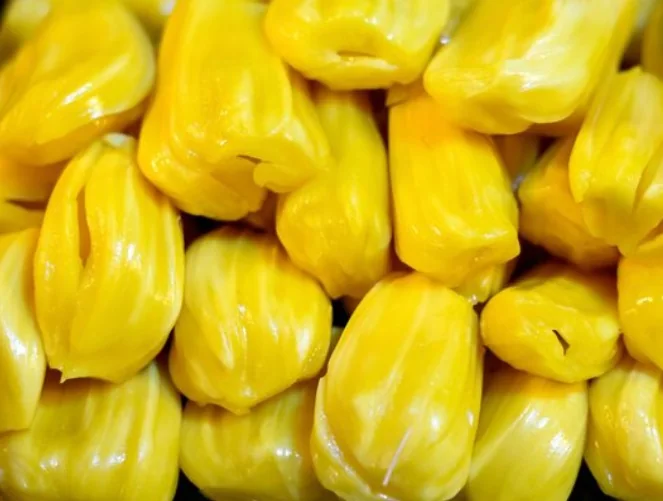
Once opened, separate the yellow fleshy pods from the fibrous rind and remove the seeds.
The ripe flesh can be eaten fresh, blended into smoothies, mixed with yoghurt or added to desserts.
Unripe jackfruit is commonly cooked in stews, curries, tacos, burgers and stir-fries because of its meat-like texture.
The seeds should always be boiled or roasted before eating.
Depending on the season and size, whole jackfruits in Kenya typically sell for between Sh300 and Sh4,000, while individual fruit pods often retail for Sh10 to Sh30 each in local markets.
Although nutritious, jackfruit may not be suitable for everyone.
People with chronic kidney disease should consult a healthcare professional before eating large amounts because the fruit is high in potassium.
Those with latex or birch pollen allergies may experience allergic reactions due to cross-reactivity.
People with diabetes should enjoy ripe jackfruit in moderation because it naturally contains sugars.
Researchers also advise caution for people taking blood-thinning medication, as some studies suggest jackfruit seeds may influence blood clotting.
Whether bought from roadside vendors in Mombasa, harvested from backyard trees in Kilifi or grown on farms in western Kenya, jackfruit remains one of East Africa's most versatile tropical fruits.
As researchers continue studying its nutritional value and potential health benefits, one thing is already clear: jackfruit is much more than a sweet seasonal snack; it is a fruit with remarkable nutritional value and uses that extend far beyond the kitchen.


















































Comments
Sign in with Google to comment, reply, and like comments.
Continue with Google