Government extends 8 per cent VAT relief on fuel for three months to cushion consumers
Listen to article
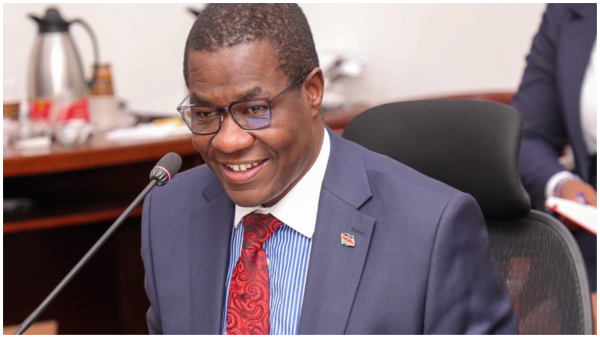
Energy Cabinet Secretary Opiyo Wandayi said the extension will help reduce the impact of global market changes as tensions in the Middle East continue to affect international oil prices.
The government has extended the 8.0 per cent VAT rate on petroleum products by a further three months to October 14, 2026, in a move aimed at cushioning consumers from global oil market pressures.
In a statement on Tuesday, Energy Cabinet Secretary Opiyo Wandayi said the extension will help reduce the impact of global market changes as tensions in the Middle East continue to affect international oil prices.
"As part of the Government's commitment to cushioning households and businesses from international market volatility, in consultation with the National Treasury, we have extended the application period for 8 per cent Value Added Tax (VAT) on petroleum products for a further three months, until October 14, 2026," Wandayi said.
More To Read
- India protests attacks on two commercial vessels in Strait of Hormuz which left one seafarer dead
- Oil prices jump 4 per cent to Sh10,203 per barrel amid US-Iran tensions over Strait of Hormuz
- UK Maritime Trade Operations upgrades Strait of Hormuz threat to severe despite open shipping route
- Iran shuts Strait of Hormuz indefinitely raising fresh fears of fuel price surge
- Commercial vessels advised to exercise caution in Strait of Hormuz amid security concerns
- Shipping traffic through the Strait of Hormuz high amid a resurgence in attacks
He assured Kenyans that fuel availability will not be affected by rising global oil market pressure linked to the Middle East crisis, saying the country’s fuel stocks and supply systems remain strong.
According to Wandayi, Kenya has continued receiving petroleum cargoes on schedule under the Government-to-Government fuel arrangement, ensuring a steady supply across the country.
In this regard, he said the government will deploy Sh945 million from the Petroleum Development Levy in the July-August 2026 pricing cycle to sustain the current fuel price levels.
Latest Stories
- IEBC fines Nakuru East MP David Gikaria Sh2.5 million for electoral code breach
- India protests attacks on two commercial vessels in Strait of Hormuz which left one seafarer dead
- Viwandani MCA Aaron Kang'ara Wangare charged over violent Donholm robbery and property damage
- Dangote's planned Lamu oil refinery faces growing opposition over environmental concerns
"Further, in the July-August 2026 pricing cycle, the Government will deploy a subsidy from the Petroleum Development Levy to the tune of Sh945 Million to sustain the current price levels. These interventions reflect our broader commitment to protecting consumers, supporting businesses and safeguarding the economy from external shocks while ensuring that petroleum products remain as affordable as possible under prevailing global market conditions," Wandayi said.
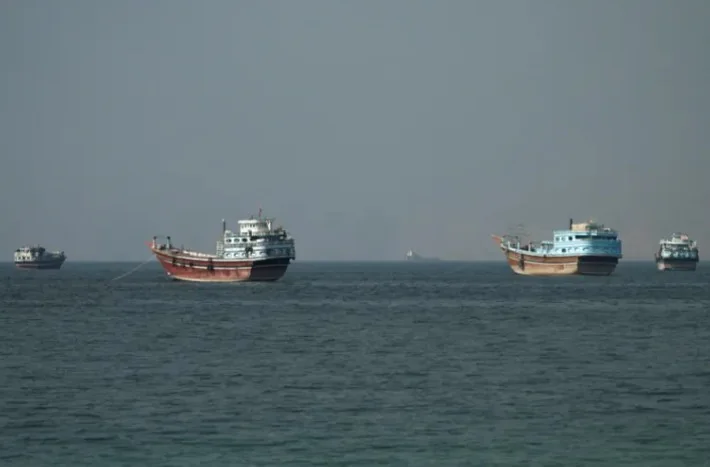
The CS said the renewed tensions in the Middle East have affected international energy markets, with reduced oil tanker movement through the Strait of Hormuz and increased uncertainty over global fuel prices.
He said attacks on commercial vessels have affected shipping activity in the region, with commercial traffic through the Strait of Hormuz dropping to its lowest level in about two months.
“The market remains unsettled, and the Strait of Hormuz remains constrained, with commercial traffic running well below its usual levels and the daily Platts assessments moving sharply from one session to the next as events in the region continue to unfold,” Wandayi said.
He noted that in such a situation, global oil prices can change within a short period depending on developments in the region.
“In a market of this kind, world prices can move either way within a week,” he said.
He, however, noted that Kenya’s fuel supply has remained stable despite the uncertainty, with cargoes continuing to come from different loading regions outside the Gulf.
“What we can state plainly is this: Kenya's fuel supply has held firm throughout. Under our Government-to-Government arrangement, cargoes have continued to be sourced from a wider set of loading regions beyond the Gulf, every scheduled cargo has arrived and offloaded on time, and fuel has remained available at the pump throughout the country,” he said.
The CS said the Government-to-Government fuel arrangement has helped Kenya manage the effects of global market disruptions by maintaining fixed freight and premium costs.
He said importers, depending on spot purchases and open tenders, have faced increased freight and insurance costs whenever fresh disruptions occur in international markets, while Kenya has continued operating under fixed terms.
“That fixed cost, held constant while benchmark prices swing, is what has kept our landed costs in check and our deliveries on schedule, and it has allowed our suppliers to load from alternative regions without passing the cost of that flexibility on to the Kenyan motorist,” Wandayi said.
He added that the arrangement has continued to support fuel security and has become more important during periods of global market uncertainty.
Wandayi also noted that international oil benchmarks have started rising again following the renewed Middle East crisis, and the pressure will be reflected in upcoming fuel pricing cycles.
He, however, said his "Ministry will continue to work closely with the industry to keep supply consistent and uninterrupted, to defend the fixed terms of our Government-to- Government arrangement, and to keep Kenyans fully and openly informed as the picture continues to develop."
Wandayi also emphasised that the government has put in place measures to strengthen Kenya’s petroleum sector and improve its ability to withstand external challenges.
“As a government, we have invested significantly in building a more resilient petroleum sector that is better equipped to withstand external shocks. The systems, partnerships and strategic interventions we have put in place over the past few years continue to provide confidence that Kenya can maintain a reliable and uninterrupted fuel supply, even as global markets experience heightened volatility,” Wandayi said.
He further said the fuel supply arrangement has improved predictability, strengthened the petroleum supply chain and reduced pressure on foreign exchange demand.
Wandayi assured motorists, public transport operators, manufacturers, farmers, businesses, investors and other consumers that the country has enough fuel stocks.
“Against this backdrop, I wish to assure all Kenyans that these global developments have not affected the availability of petroleum products in our country. Fuel remains readily available across the country, supported by adequate national stocks, a resilient and fully operational import and distribution system, and the continued success of the Government-to-Government (G2G) fuel supply arrangement, which has strengthened Kenya's energy security while reducing pressure on foreign exchange demand,” he said.
He added that the government remains committed to ensuring continued access to petroleum products despite changes in global markets.
Top Stories Today





































Comments
Sign in with Google to comment, reply, and like comments.
Continue with Google